OUR COMPANY
Audio version of this article
Sudden Civil War: A Rapidly Deteriorating Situation for Stranded Personnel
When armed conflict breaks out in a country where airline and business aviation personnel are working or in transit, operators can lose access to safe roads, functioning airports, and reliable communication within hours. What starts as a localized security incident can quickly become a full evacuation operation spanning multiple countries and government agencies.
150+
Security, medical, and operational cases managed during the crisis
28
Subject-matter experts activated to the Crisis Management Team
900KM
Covered by two overland evacuation convoys out of Khartoum
In April 2023, that threat arrived without warning for airline personnel based in Khartoum, Sudan, when a political standoff turned into open warfare overnight.
Case Study
The Case
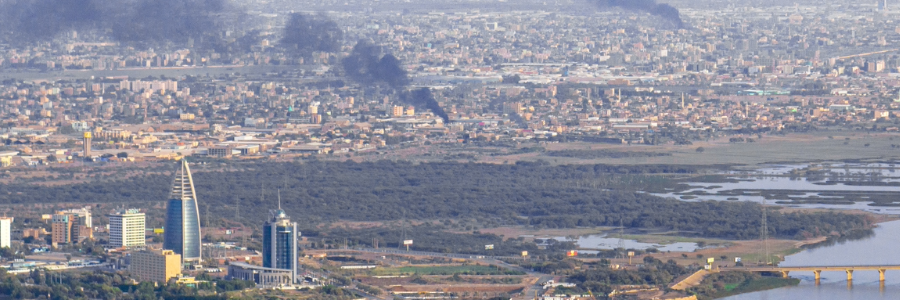
On April 13, 2023, the Sudanese Rapid Security Forces mobilized troops to Khartoum and Merowe, marking the start of a full-scale internal war between the RSF and the Sudanese Army. Streets that had been open the day before turned into active combat zones. Supplies and vehicles were looted, and normal transport routes became impassable.
International SOS issued an advisory urging affected clients to stand fast for the next 24 hours following the paramilitary mobilization. Airline personnel on the ground in Khartoum had no clear path out and no way to know how quickly the situation would worsen.
MedAire activated its Crisis Management Team within hours.
MedAire and International SOS stood up a 28-person Crisis Management Team drawn from security, network planning, operations, medical, and aviation specialties. The team established a command center in the Dubai Assistance Centre, bringing global subject-matter experts together to build extraction plans and coordinate logistics in real time.
MedAire arranged supply drops of food, water, and medication for personnel still in-country, provided ground movement planning and safe evacuation guidance, and liaised directly with governments, airlines, ministries, and civil aviation authorities to move stranded individuals out of Sudan.

Personnel in Khartoum did not have to negotiate transport, lodging, or border logistics on their own. MedAire produced risk assessments for carriers operating into Port Sudan and worked with air carrier insurance providers to defend those assessments, which cleared the way for evacuation flights to proceed.
Two overland evacuation convoys covered 900 kilometers over 17 to 22 hour journeys to reach Port Sudan, where MedAire had pre-booked more than 50 triple hotel rooms to receive evacuees from Khartoum.
Operational Context
Challenges
Active Combat and Looting
Street warfare broke out with little warning, and supplies and vehicles were looted across the city. Any extraction plan had to account for a ground environment that was changing by the hour, not the day.
Fast-Moving, Fragmented Information
Conditions shifted quickly enough that clients needed constant updates rather than a single briefing. Keeping personnel informed required five special advisories, 21 alerts, 21 party lines, and seven audio updates over the course of the response.
Coordination Across Borders and Agencies
Getting people out of Sudan meant working with multiple governments, airlines, ministries, and civil aviation authorities at once, then continuing that coordination once evacuees crossed into Saudi Arabia and Egypt.
How We Helped
MedAire's Support
Crisis Management
Team Activation
Within hours of the mobilization, MedAire and International SOS activated a 28-person Crisis Management Team spanning security, medical, operations, and aviation, and stood up a command center in Dubai to run the response.
Extraction and
Evacuation Logistics
MedAire arranged supply drops of food, water, and medication, planned ground movement to Port Sudan, and produced risk assessments that supported evacuation flights and defended them with air carrier insurance providers.
Cross-Border
Reception Support
Incident management personnel were deployed to Saudi Arabia and Egypt to meet and support evacuees arriving from Port Sudan at Jeddah and other maritime ports, carrying the response through to a safe endpoint.