
OUR COMPANY

Audio version of this article
Cardiac Symptoms Onboard: A Preventable Diversion
Chest discomfort, jaw pain, and shortness of breath at altitude put crews in a difficult position. Without a clear diagnostic picture, the safest-seeming choice is often an emergency diversion, even when the underlying cause turns out to be manageable in the air. Aviation operators that carry advanced onboard diagnostics and maintain a direct line to ground-based physicians can rule out the worst-case scenario quickly and keep the aircraft on its planned route.
A passenger's cardiac history and a fresh set of alarming symptoms three hours into a transatlantic flight put one crew squarely in that position, and the tools they had onboard changed the outcome.
Case Study
The Case

A 61-year-old male passenger traveling for business on a flight to Montreal began feeling unwell roughly three hours into the journey. He had a documented history of cardiovascular conditions, and the jaw pain and shortness of breath he was now experiencing matched symptoms he had been warned to watch for. Concerned he might be having a heart attack, he flagged down the cabin crew.
The crew recognized the seriousness of the symptoms immediately. A passenger with a cardiac history reporting jaw pain and breathlessness at cruising altitude, hours from the nearest airport, is exactly the scenario that can end in an unplanned diversion if the crew has no way to confirm what is actually happening.
The cabin attendant reached for MedAire's Digital Assessment Kit.
The trained attendant applied the DAK's ECG leads to the passenger's chest. Within moments, the device captured his heart's electrical activity and transmitted the reading directly to a MedLink physician on the ground. The ECG showed regular heart activity, ruling out an acute heart attack and immediately narrowing the range of likely causes.
With that critical piece of information confirmed, the crew did not need to treat the situation as a worst-case cardiac event requiring an emergency landing. They continued to monitor the passenger's vital signs and administered medication to ease his discomfort, all while staying in direct contact with the MedLink physician for ongoing guidance.
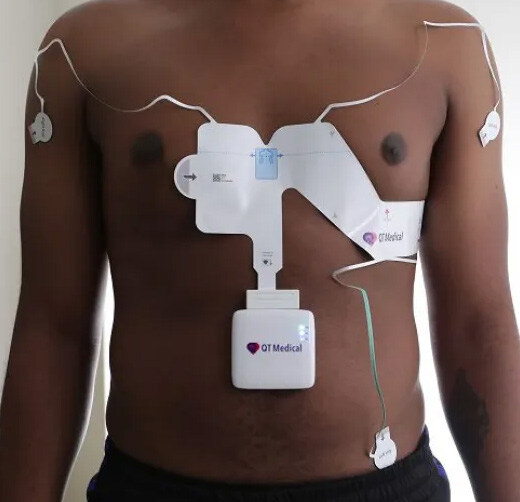
The crew did not have to weigh a diversion decision without data. They had a clinical reading in hand and a physician on the line, and that combination let them manage the emergency in the cabin instead of on the ground at an unplanned airport.
The flight continued to Montreal as scheduled. The passenger's condition remained stable for the rest of the journey, and he was met by ground medical staff on arrival for follow-up care.
Operational Context
Challenges
Ambiguous Cardiac Symptoms at Altitude
Jaw pain and shortness of breath can point to a heart attack, a panic response, or something far less urgent. Without objective data, crews have no reliable way to distinguish between them, and the passenger's own cardiac history raised the stakes of getting it wrong.
The Cost of an Unnecessary Diversion
Diverting to the nearest airport is the default safety net when a crew has no way to assess a cardiac complaint, but it carries real consequences: significant delays, missed connections, and substantial financial cost to the airline and its passengers.
Delivering Clinical-Grade Data Without a Doctor Onboard
Cabin crew are not clinicians. The equipment they use in an emergency has to be simple enough to operate correctly under pressure while still producing data that a physician on the ground can trust and act on in real time.
How We Helped
MedAire's Support
Real-Time
ECG Diagnostics
The Digital Assessment Kit's ECG leads captured the passenger's heart activity in minutes and transmitted a clean, readable trace straight to a MedLink physician, ruling out an acute heart attack without guesswork.
MedLink Physician
Consultation
A MedLink doctor reviewed the ECG data live and stayed on the line for the remainder of the flight, guiding the crew's medication decisions and monitoring as the passenger's condition stabilized.
Diversion
Avoidance Guidance
With a confirmed clinical picture in hand, the physician advised continuing to Montreal as planned, sparing the airline an unnecessary diversion and the passenger a disrupted journey.