OUR COMPANY
Audio version of this article
Although fictional, this scenario is informed by real incidents managed by GoCrisis and MedAire and demonstrates the complex demands placed on business aviation operators during a crisis.
The Scenario
A business jet carrying executives and family members is landing in Istanbul after a flight from Dubai. Weather conditions are poor. During the approach, the crew experiences a significant technical failure and the aircraft leaves the runway, catching fire.
There are survivors and fatalities.
Within minutes, images from the scene appear online. Names begin circulating before official notifications can be made. Journalists start calling. Families want answers. Employees need information.
The operator's crisis response begins immediately.
01
The First Hour

What Happened
A senior GoCrisis Incident Director joined the operator's crisis calls, helping establish structure during a period of intense pressure and limited information. A holding statement was drafted and released. A Media Call Centre was activated to separate journalist enquiries from family communications. Legal, regulatory, and reputational implications were considered before key decisions were made.
Without Contingency360
Leadership would likely have been managing media enquiries, family calls, regulatory questions, and internal communications simultaneously. In the first hour of a crisis, that can slow decision-making and create confusion around priorities and responsibilities.
02
Managing Inbound Communications
What Happened
Dedicated emergency lines were activated within 30 minutes. Multilingual agents trained in family assistance handled inbound calls, collected Next-of-Kin information, and provided a clear process for follow-up. Journalist enquiries were diverted to the Media Call Centre, allowing operational teams to stay focused on the response.
Without Contingency360
Customer service teams would have absorbed a rapidly increasing volume of calls from families, journalists, clients, and partners. Maintaining consistent communication would have become significantly more challenging.
03
The Survivors
What Happened
Injured passengers are transported to multiple hospitals. MedAire identified the hospitals treating the survivors and established direct communication with clinical staff. Patient conditions and treatment plans were monitored, guarantee of payments were arranged, and evacuation options were assessed where necessary.
MedAire's global clinical network was already in place before the call came in, supporting communication with the hospital.
Without Contingency360
The operator would have been attempting to navigate an unfamiliar healthcare system while coordinating information from multiple sources. Treatment would still have taken place, but obtaining timely, reliable medical information would have been far more difficult.

04
The Response on the Ground

What Happened
Specialist responders mobilised to Istanbul and the operator's base in Dubai. Family Assistance personnel deployed to support affected relatives. Mental health and trauma specialists were made available to families, employees, and crew members. Personal Effects specialists began cataloguing and documenting recovered belongings to support their eventual return.
Essential resources were deployed immediately from pre-positioned locations.
Without Contingency360
The operator would have been searching for specialist providers while simultaneously managing the incident itself. Valuable time would have been spent building capabilities that were needed immediately.
05
Supporting Families
What Happened
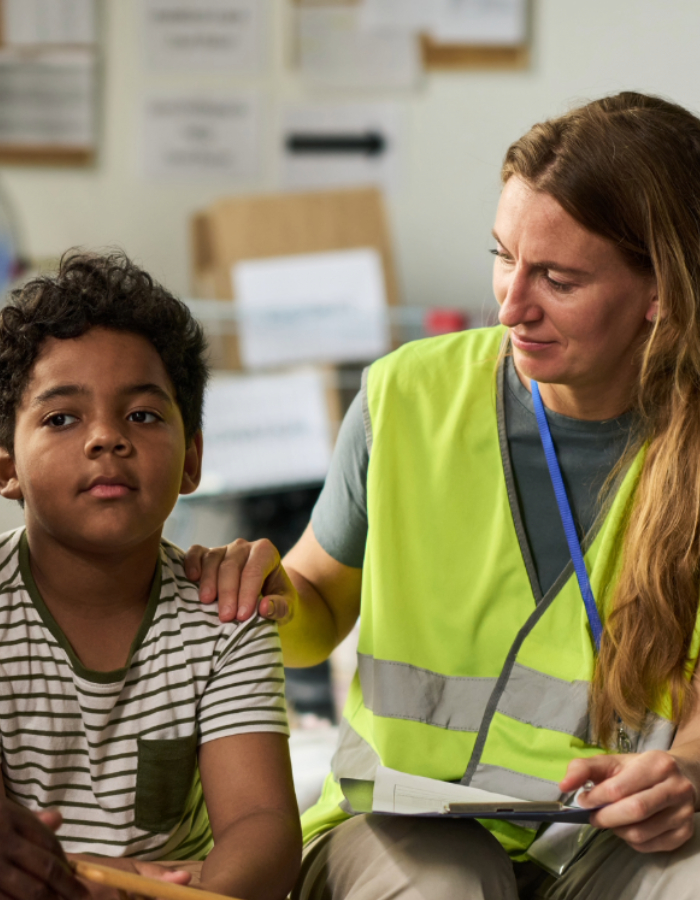
A Family Assistance Centre was established in a secure hotel away from media access. Daily briefings were coordinated with local authorities. A secure Family Website provided updates to relatives who could not travel. Memorial planning began early so that preparations were in place when families needed them.
Without Contingency360
Families arriving in Istanbul would have relied on a small operator team already dealing with multiple competing priorities. Providing consistent information and support would have been considerably harder.
06
The Investigation
What Happened
As the formal investigation began, Contingency360 supported family communications, search and recovery activities, mortuary and Disaster Victim Identification (DVI) processes, and coordination with specialist recovery partners.
Without Contingency360
The operator would have been navigating a complex, multi-jurisdictional investigation while sourcing specialist support and managing stakeholder communications at the same time.
07
Repatriation and Personal Effects
What Happened
Victim identifications were completed over the following weeks. Repatriation arrangements were coordinated according to each family's wishes. Personal effects were processed, catalogued, stored, and returned through a managed process. Throughout, families had a single point of contact.
Without Contingency360
Repatriation and personal effects management require specialist expertise that many operators do not maintain internally. Managing these processes consistently and compassionately can become a significant challenge without dedicated support.
08
Months Later

What Happened
Media attention faded, but the response continued. Contingency360 maintained welfare check-ins, Family Website updates, support for the first anniversary memorial, and long-term personal effects management. GoCrisis worked with the operator to incorporate lessons from the response into their Emergency Response Plan.
Without Contingency360
The immediate phase of a crisis may last days or weeks, but the needs of families, regulators, legal teams, and other stakeholders often continue for months or years. Sustaining that support can be difficult once organisations return to day-to-day operations.
The Lesson
When a crisis involves survivors requiring support, media attention, family assistance, regulatory scrutiny, and cross-border repatriation, MedAire and GoCrisis work together to deliver a coordinated and expert response.
Effective crisis response begins long before an incident occurs. It is built on experienced people, proven processes, the infrastructure needed to respond and specialist partners ready to respond around the clock.
That is what Contingency360 provides.
Find out how Contingency360 can protect your operation
Learn About Contingency360