
OUR COMPANY
Weight-Loss Medications at Sea: What Yacht Crew and Captains Need to Know
Audio version of this article
Weight-Loss Medication at Sea: Yacht Crew Guide | MedAire
13:31
Key takeaways
- GLP-1 medicines such as Wegovy (semaglutide) and Mounjaro (tirzepatide) are effective prescription treatments, but their side effects can affect fitness for duty at sea.
- Nausea, vomiting, diarrhea and constipation can affect more than 1 in 10 users and are most likely when starting treatment or increasing the dose (MHRA, 2024a).
- Crew should declare prescription medication to the captain or head of department (HOD) under vessel procedures.
- Crew do not need to wait for an emergency: MedAire’s 24/7 Assistance center provides remote medical advice to member vessels worldwide.
Weight-loss medications have become increasingly visible ashore and across the yachting industry. Medicines such as semaglutide belong to a group called GLP-1 receptor agonists. Ozempic contains semaglutide and is prescribed for type 2 diabetes, while Wegovy contains the same active ingredient and is prescribed for weight management (Diabetes UK, n.d.). Mounjaro contains tirzepatide, a related medicine that is also licensed for weight management (MHRA, 2024a).
These medicines mimic GLP-1, a natural hormone released by the gut after eating. They reduce appetite, slow how quickly the stomach empties and help people feel full for longer (MHRA, 2024b). The same effects explain the most common side effects, which is why they matter onboard.
Used appropriately and under medical supervision, these medicines can be effective treatments. For yacht crew, there is an additional question: could the medication, or its side effects, affect your ability to work safely onboard?
Can yacht crew take weight-loss medications while working onboard?
Yes, when the medication is prescribed by a registered healthcare professional, dispensed by a legitimate pharmacy and taken exactly as directed. Crew must also consider how side effects could affect watchkeeping, emergency responsibilities and physically demanding work, and follow their vessel’s procedure for declaring prescription medication.
Eligibility for weight-management treatment is decided by the prescriber against national guidance, such as NICE guideline NG246 in the UK (NICE, 2025).
What GLP-1 side effects matter most at sea?
Gastrointestinal side effects matter most: nausea, vomiting, diarrhea and constipation. These can affect more than 1 in 10 users and are most likely when starting treatment or after a dose increase (MHRA, 2024a).
Although these effects are usually not serious, vomiting and diarrhea can cause severe dehydration, which in serious cases can lead to kidney damage and hospitalization (MHRA, 2024a). By October 2024, the UK medicines regulator had received 7,228 Yellow Card reports of nausea, vomiting or diarrhea linked to GLP-1 medicines used for weight management, 68 of which involved hospitalization (MHRA, 2024a).
At sea, nausea needs particular attention. GLP-1 medicines act on areas of the brainstem that control nausea and vomiting, which are also involved in motion sickness, so rough conditions may make nausea worse for some crew.
Balance is another consideration. A large US study of more than 419,000 semaglutide users found a significantly higher rate of diagnosed vestibular disorders, which affect balance, dizziness and spatial orientation, than in matched non-users (Toraih et al., 2025). Diagnoses remained uncommon (0.41% after three years), and the study shows an association rather than proof of cause. However, crew who work at height, on deck or in tenders should report any new dizziness or balance problems.
For yacht crew, long working days, hot environments, physically demanding duties and distance from shore-based care all increase the impact of these symptoms. Do not simply push through your duties.
Seek medical advice if you experience:
persistent vomiting or diarrhea
difficulty eating or keeping fluids down
unusual weakness or persistent fatigue
shaking, sweating, tiredness or confusion, which can be signs of low blood sugar in some people using these medicines for weight management (MHRA, 2024b)
dizziness, vertigo or problems with balance
!
severe upper abdominal pain, especially pain that spreads to the back, which can be a sign of pancreatitis; pancreatitis and gallbladder problems are less common but serious side effects (MHRA, 2024a)
!
sudden loss of vision or rapidly worsening eyesight, which can be a sign of NAION, a very rare side effect of semaglutide affecting up to 1 in 10,000 users (World Health Organization, 2025)
Severe abdominal pain or sudden vision changes need urgent medical advice.
How can reduced appetite affect energy and strength onboard?
GLP-1 medicines slow digestion and help you feel fuller for longer, which reduces how much you eat (Diabetes UK, n.d.). Onboard, eating less must be balanced against the physical demands of your role.
Every role needs adequate nutrition, hydration and energy: deck crew handling lines and tender operations, engineers working in hot engine rooms, and interior crew working long service hours during charter.
Weight lost on these medicines is not all fat. In a body composition substudy of the STEP 1 trial, lean mass, which includes muscle, accounted for roughly 40% of the weight lost with semaglutide (Wilding et al., 2021). This can affect strength and physical endurance.
To help preserve muscle:
aim for two to three structured resistance or strength training sessions a week, even if your job is already physical
eat enough protein at each meal, even when your appetite is reduced
discuss with your prescriber whether to start treatment or increase your dose during leave or a period ashore, rather than at the start of a charter or busy season, so the period when side effects are most likely passes before demanding duties
Pay attention to how you actually feel and perform. Unexpected weakness, dizziness, persistent fatigue or difficulty maintaining normal nutrition and hydration should prompt you to seek medical advice.
How should crew store weight-loss medication pens onboard?
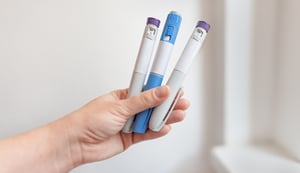
Store pens as the Patient Information Leaflet directs: unused pens generally need refrigeration, and a pen in use can be kept below 30°C only for a limited time. For example, a Wegovy FlexTouch pen in the UK can be used for up to six weeks after first use. Rules differ by product and pen, so always check the leaflet for your medication.
This matters on longer rotations. If you will need more pens than one in-use period covers, arrange refrigerated storage for spare pens with the officer responsible for the vessel’s medical stores. Keep pens away from hot spaces such as engine rooms and direct sunlight, and remember that cabin temperatures can rise above 30°C if air conditioning fails.
Can weight-loss medication affect mental wellbeing?
Yes. Changes to weight, appetite, eating patterns and body image affect people differently, and physical health is not the only consideration.
If you notice a change in your mood, feel anxious or low, or simply do not feel like yourself, talk to someone and seek appropriate support. Whatever the cause, changes to your mental wellbeing deserve the same attention as physical symptoms.
When should crew tell the captain or HOD about weight-loss medication?
Crew should follow their vessel’s procedure for declaring prescription medication whenever the medication, the underlying condition or side effects could affect fitness for duty, watchkeeping, emergency responsibilities or safe performance of their role. Your captain or HOD needs to know what matters for your safety.
Declaration is especially important when you are:
1
joining a vessel while taking prescription medication
2
starting a new medication
3
changing your dose
4
experiencing new or worsening side effects
5
experiencing symptoms that may affect your ability to work safely
When should crew use telemedical advice for medication side effects?
Before a symptom becomes an emergency. If you are concerned about side effects or another health issue, your yacht’s telemedical assistance provider can give professional medical guidance, even when the vessel is far from shore.
For member vessels, MedAire’s 24/7 Assistance center provides remote medical advice worldwide, helping crew and captains decide how to manage symptoms onboard and when shore-based care is needed. Support does not have to stop with physical symptoms: depending on your vessel’s MedAire Membership, confidential counseling through qualified providers may also be available.
You do not need to wait for something to become an emergency before asking for help.
Checklist: using weight-loss medication safely onboard
If you are taking a GLP-1 or another prescribed weight-loss medication:
✓
Take it only as prescribed and follow the advice of your healthcare professional. Where possible, start or increase your dose during a period ashore rather than at the start of a charter.
✓
Store pens correctly, following the Patient Information Leaflet, and arrange refrigerated storage for spare pens on longer rotations.
✓
Use legitimate sources. The MHRA has warned about falsified GLP-1 products obtained outside proper prescribing and pharmacy channels; some have been found to contain insulin, which can cause severe low blood sugar (MHRA, 2024b).
✓
Maintain hydration and nutrition, particularly during demanding charters, hot-weather operations and physically intensive duties.
✓
Protect your strength with two to three resistance training sessions a week and enough dietary protein.
✓
Do not ignore physical symptoms, especially persistent vomiting or diarrhea, dizziness or balance problems, weakness or difficulty maintaining food and fluid intake. Seek urgent advice for severe upper abdominal pain spreading to the back or sudden changes in vision.
✓
Follow your vessel’s prescription medication procedure and speak to your HOD or captain if the medication, the underlying condition or side effects could affect your fitness for duty.
✓
Use your telemedical assistance service for professional support with health concerns at sea.
✓
Do not ignore your mental wellbeing. If you are struggling, talk to someone and seek professional support.
✓
Dispose of needles in a sharps container. Putting needles in general waste creates a biohazard and a needle-stick injury risk for crewmates. If no suitable container is available, speak to the officer responsible for the vessel’s medical kit.
Why crew health matters for the whole vessel
With any medication, what matters is appropriate medical supervision, understanding your medication, recognizing side effects and getting support when you need it.
Your health affects more than you. In the close-knit environment of a yacht, being fit, well and able to carry out your duties safely protects you, your colleagues, guests and the wider operation. Looking after yourself, and asking for help when you need it, is part of looking after the whole crew.
Frequently asked questions
+Is Ozempic the same as Wegovy?
Both contain semaglutide. Ozempic is prescribed for type 2 diabetes, while Wegovy is prescribed for weight management (Diabetes UK, n.d.). Mounjaro contains tirzepatide, a related medicine also licensed for weight management in the UK (MHRA, 2024a).
+Do I have to tell my captain I am taking Wegovy or Mounjaro?
Follow your vessel’s prescription medication procedure. Declaration matters most where the medication, the underlying condition or side effects could affect fitness for duty, watchkeeping or emergency responsibilities. Your captain or HOD needs to know what affects your safety at work.
+Can GLP-1 side effects cause dehydration at sea?
Yes. Vomiting and diarrhea can lead to severe dehydration, which in serious cases can cause kidney damage and hospitalization (MHRA, 2024a). Heat and physical work onboard increase this risk, so crew should drink plenty of fluids throughout treatment.
+Do weight-loss injection pens need to be kept in the fridge onboard?
Unused pens generally need to be kept in a refrigerator. Once in use, many pens can be stored below 30°C for a limited time, for example up to six weeks for a Wegovy FlexTouch pen in the UK. Rules differ by product, so check your Patient Information Leaflet and arrange refrigerated storage for spare pens on longer rotations.
+Is it safe to buy weight-loss injections online?
Only through a prescription from a registered healthcare professional, dispensed by a registered pharmacy. The MHRA has warned that some falsified GLP-1 pens have been found to contain insulin, which can cause severe low blood sugar (MHRA, 2024b).
+Who can yacht crew contact for medical advice about side effects at sea?
Contact your vessel’s telemedical assistance provider through your captain or vessel procedure. For member vessels, MedAire’s 24/7 Assistance center provides remote medical advice from medical professionals, wherever the yacht is operating.
This article provides general health information and does not replace individual medical advice. Crew taking prescription medication should discuss their individual circumstances, treatment and side effects with an appropriate healthcare professional and follow their vessel’s medication and medical policies.
References
Diabetes UK. (n.d.). Semaglutide: Uses, how it works and side effects. Retrieved October 26, 2026, from https://www.diabetes.org.uk/about-diabetes/looking-after-diabetes/treatments/tablets-and-medication/semaglutide
Medicines and Healthcare products Regulatory Agency. (2024a, October 24). GLP-1 receptor agonists: Reminder of the potential side effects and to be aware of the potential for misuse. Drug Safety Update, 18(3), 1. https://www.gov.uk/drug-safety-update/glp-1-receptor-agonists-reminder-of-the-potential-side-effects-and-to-be-aware-of-the-potential-for-misuse
Medicines and Healthcare products Regulatory Agency. (2024b, October 24). MHRA reminds healthcare professionals to advise patients of the side effects of GLP-1 agonists and to report misuse [Press release]. GOV.UK. https://www.gov.uk/government/news/mhra-reminds-healthcare-professionals-to-advise-patients-of-the-side-effects-of-glp-1-agonists-and-to-report-misuse
National Institute for Health and Care Excellence. (2025). Overweight and obesity management (NICE guideline NG246). https://www.nice.org.uk/guidance/ng246
Toraih, E. A., Alenezy, A., Hussein, M. H., Hashmat, S., Mummadi, S., Alrawili, N. F., Abdelmaksoud, A., & Fawzy, M. S. (2025). The risk of vestibular disorders with semaglutide and tirzepatide: Findings from a large real-world cohort. Biomedicines, 13(5), 1049. https://doi.org/10.3390/biomedicines13051049
Wilding, J. P. H., Batterham, R. L., Calanna, S., Van Gaal, L. F., McGowan, B. M., Rosenstock, J., Tran, M. T. D., Wharton, S., Yokote, K., Zeuthen, N., & Kushner, R. F. (2021). Impact of semaglutide on body composition in adults with overweight or obesity: Exploratory analysis of the STEP 1 study. Journal of the Endocrine Society, 5(Suppl. 1), A16–A17.
World Health Organization. (2025, June 27). The use of semaglutide medicines and risk of non-arteritic anterior ischemic optic neuropathy (NAION). https://www.who.int/news/item/27-06-2025-27-06-2025-semaglutide-medicines-naion