
OUR COMPANY
Audio version of this article
Aviation Medical Technology
Connected aircraft, structured assessment tools, digital diagnostics, AEDs, medical kits, and trained crew are changing what is possible when a passenger or crewmember becomes unwell at altitude.
1 in 212
Flights has an in-flight medical event
In-flight medical events create real operational pressure for crews, pilots, and aircraft operators. Care must be delivered in a constrained environment, often far from definitive medical support.
For decades, response depended on what the crew could observe, what was available onboard, and what could be communicated to doctors on the ground. That model is changing.
Connected Response
From a Phone Call to a Data Stream
Traditional in-flight medical response often began with a voice call. Crew described symptoms, relayed vital signs if available, and worked with a ground-based physician to determine the safest next step.
Connectivity changes the quality of that conversation. A connected aircraft can transmit more than a verbal description of symptoms. It can support clearer communication, structured case details, and diagnostic information from the cabin.
"When you have high-speed internet on board, you don't just get a phone call, you get a data stream. That means real-time access to digital diagnostic tools and VoIP calls — and a future where wearable devices can be used to assess."
Dr. Paulo Alves — Vice President of Aviation Health, MedAireWithout certainty, a passenger reporting chest pain, dizziness, shortness of breath, or confusion may prompt a flight diversion. The better the information MedLink physicians receive from the aircraft, the more effectively they can guide the crew through assessment, care, and operational next steps.
Point-of-Care Support
The In-Flight App: Streamlining Medical Assessment with Technology
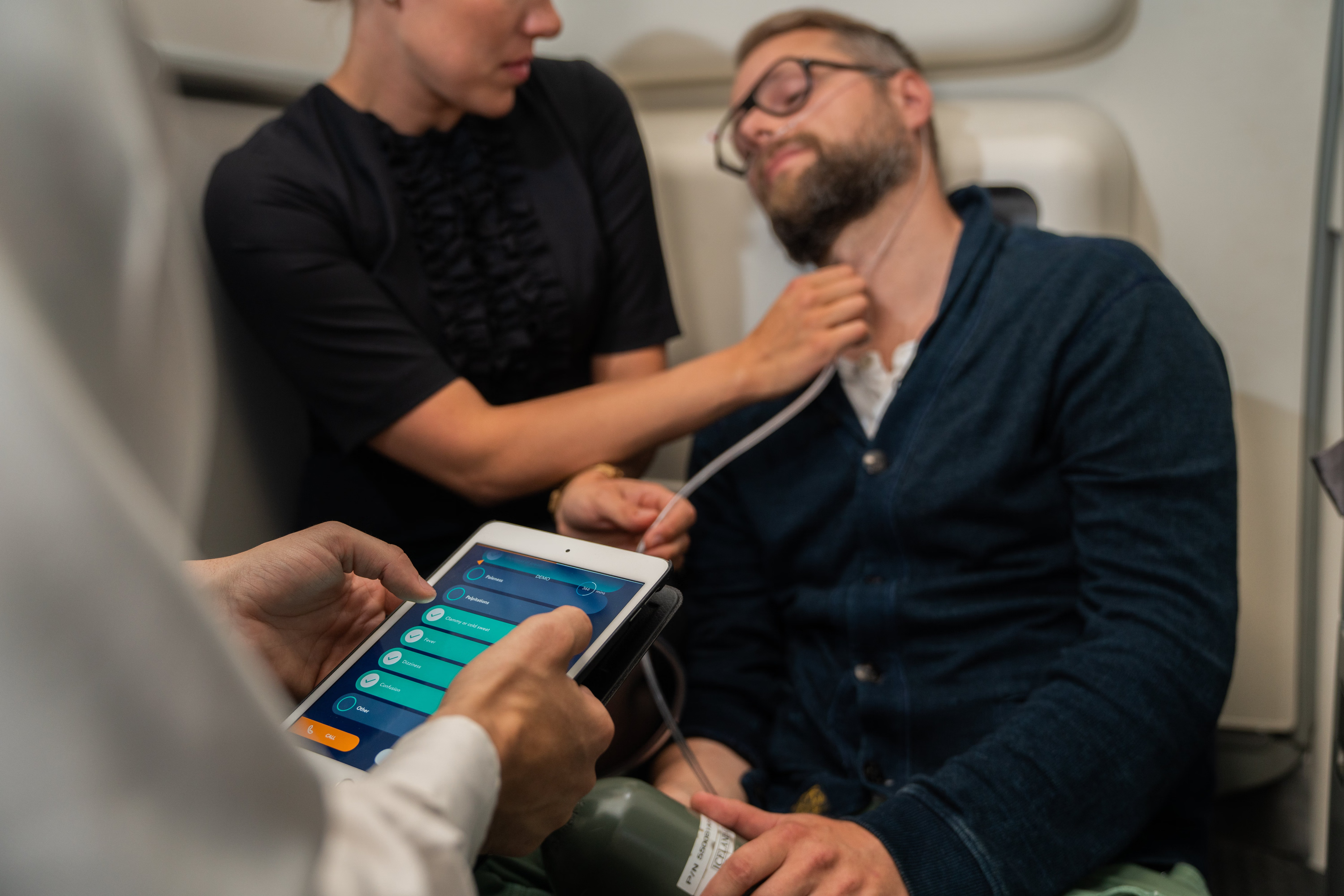
During a medical event, crew need a calm, consistent way to assess the passenger and communicate what they find. MedAire's In-Flight App supports that process by guiding crewmembers through scenario-based patient assessments and helping them capture important information during the event.
The app helps first responders enter patient details, record relevant findings, and create a case summary that can be saved or transmitted to MedLink over onboard Wi-Fi. Once the assessment is complete, crew can call MedLink directly from the app when connected, giving physicians access to the information needed to support timely guidance.
The value for crewmembers is clarity. Instead of relying on memory or fragmented communication under stress, crew follow a structured process that gives MedLink physicians a clearer picture of what is happening onboard. The app is used by more than 300,000 crew members worldwide, is informed by experience from more than one million cases, and works with or without connectivity by supporting existing aircraft communication channels.
Digital Diagnostics
The Digital Assessment Kit: Digital Tools for In-Flight Medical Evaluation
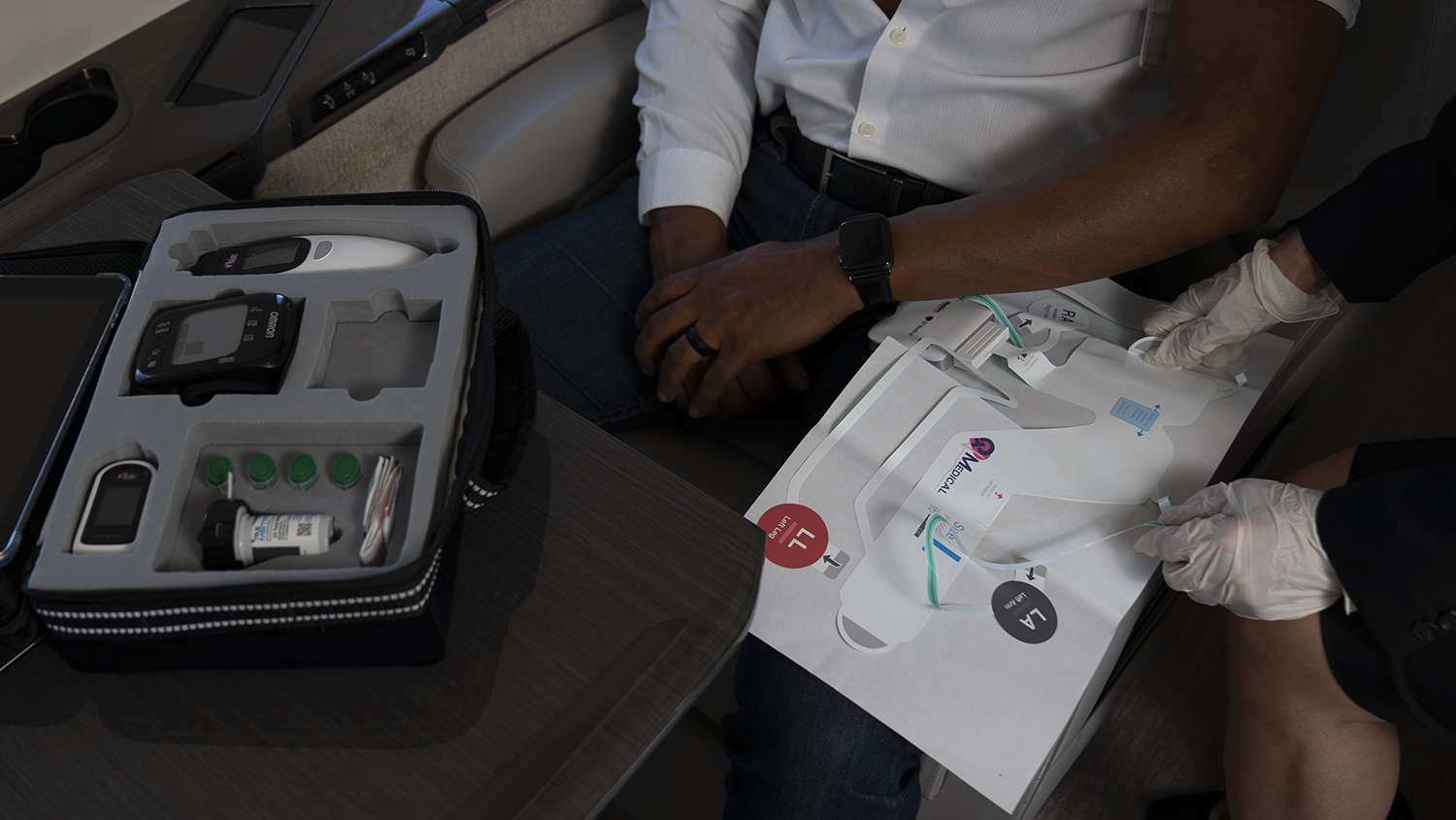
The Digital Assessment Kit (DAK) is where connected medical response becomes more clinically useful. The DAK combines medical-grade devices with MedAire's Aviation App to streamline in-flight assessment and deliver cleaner clinical data to MedLink.
The kit includes a blood pressure monitor, pulse oximeter, glucometer, contactless thermometer, 12-lead ECG, and an iPad pre-loaded with MedAire's Aviation App. The devices integrate with the app through Bluetooth, helping crew collect patient data in a structured way.
Symptoms alone can be misleading in-flight. Chest discomfort may be benign, but it may also indicate a serious cardiac event. Dizziness could be caused by dehydration, low blood sugar, anxiety, or something more severe. The DAK shifts the focus from "what does the passenger look like?" to "what does the data show?"
Connected Clinical Data
On connected aircraft, MedAire receives more than 10,000 call minutes per month directly through the in-flight app. What arrives with those calls can be more than a voice description of symptoms. It can include structured assessment data and, when a Digital Assessment Kit is onboard, ECG readings that physicians can interpret in real time from the ground.
"Pilots are understandably cautious. If there's uncertainty, they tend to lean towards diverting. However, with access to robust clinical data from these devices, we can often state confidently: 'This person is stable, and you can safely continue to your destination.'"
Dr. Paulo Alves — Vice President of Aviation Health, MedAireWhat Is Inside the Digital Assessment Kit?
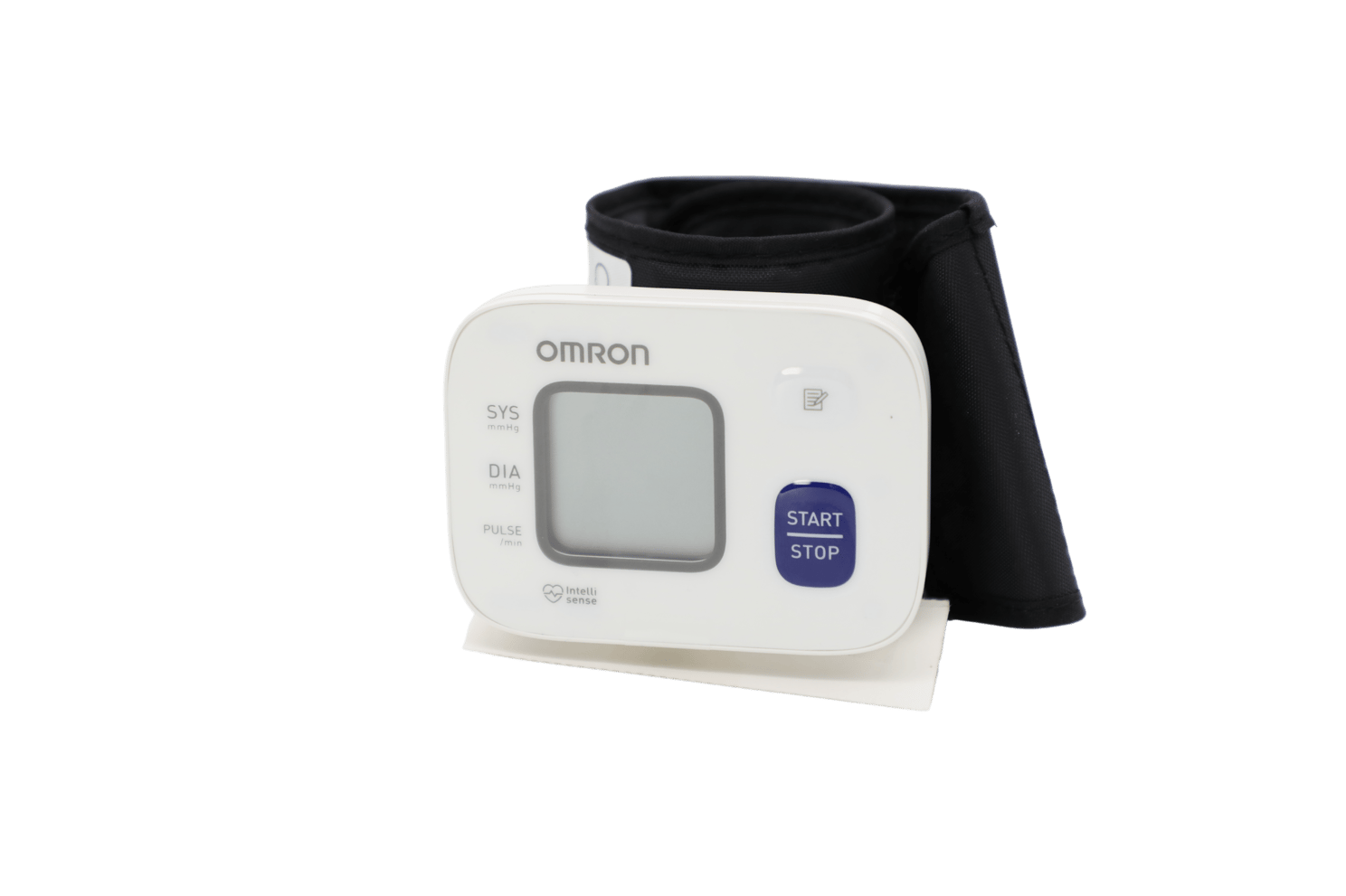
Blood Pressure MonitorHelps crew collect readings without manual methods that can be difficult in a noisy cabin environment. |
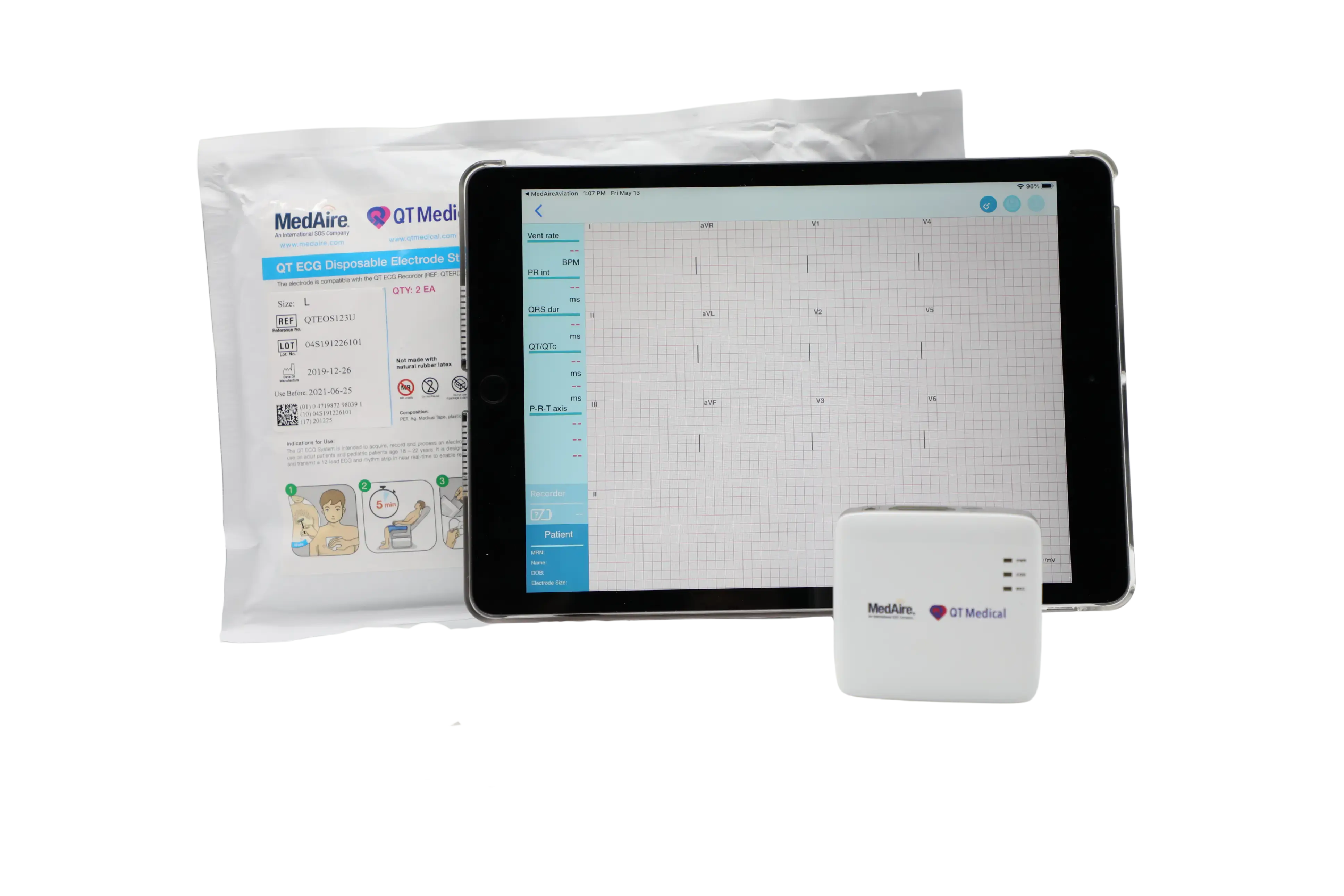
12-Lead ECG RecorderFDA and CE approved. Leads attach via a single sticker on the torso. The gold standard for in-cabin cardiac diagnosis. |
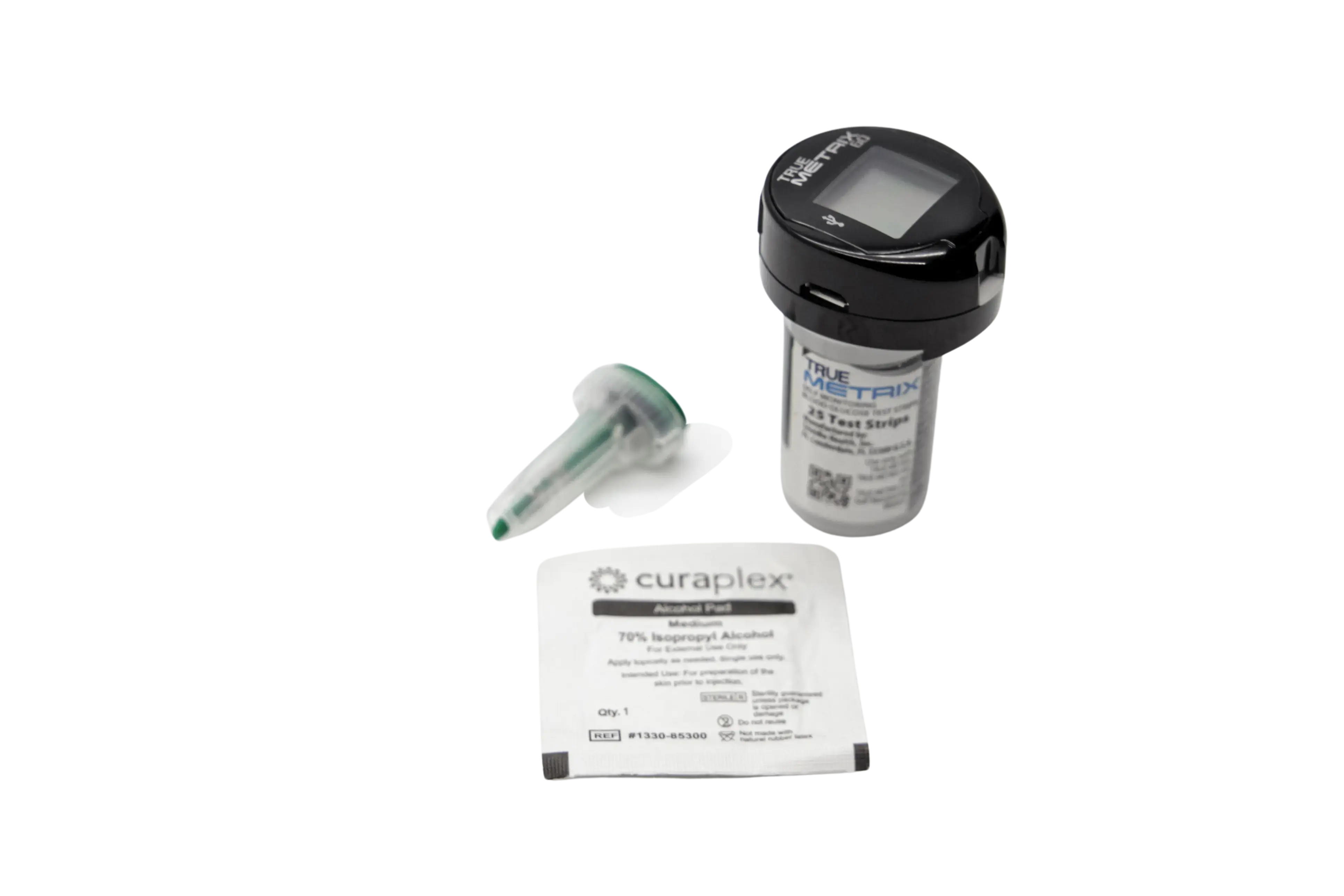
Digital GlucometerQuick blood glucose checks with no calibration required. Fast, accurate readings anytime. |
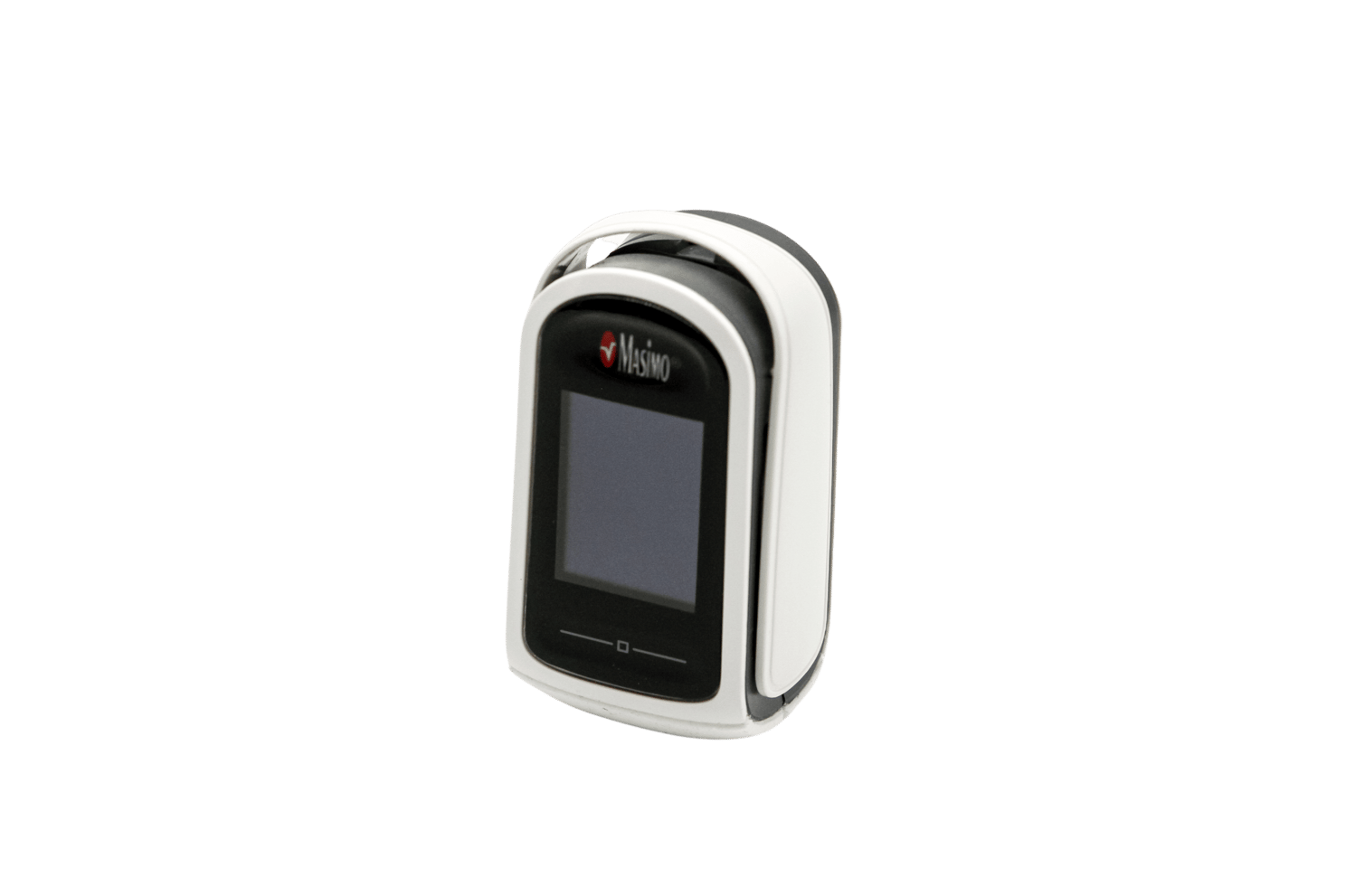
Pulse OximeterMeasures oxygen saturation, blood perfusion, and respiratory rate for better physician assessment. |
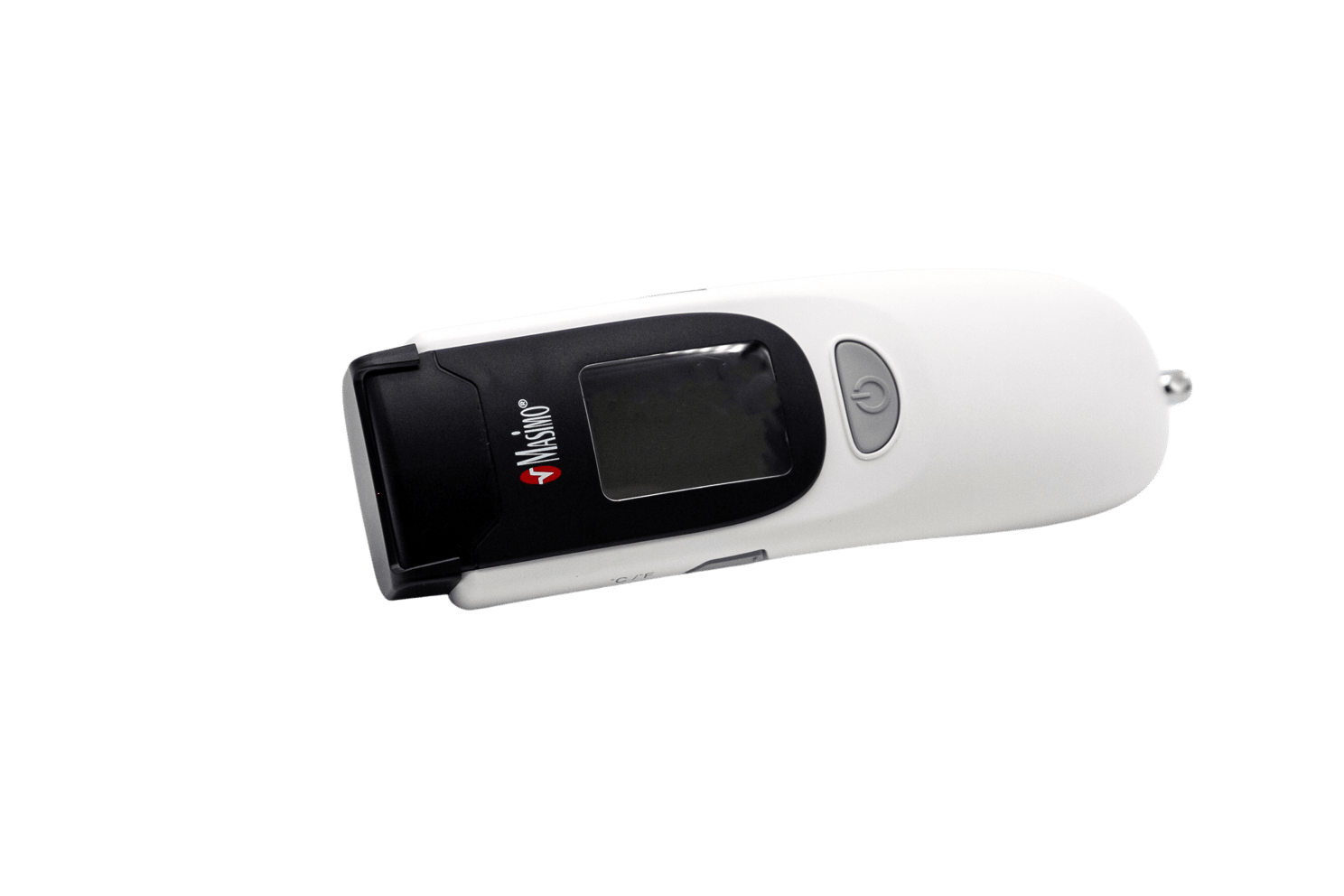
Contactless ThermometerTemperature readings without direct skin contact, reducing cross-contamination risk in the cabin. |
Equipment Spotlight
The AED: When Assessment Becomes Action
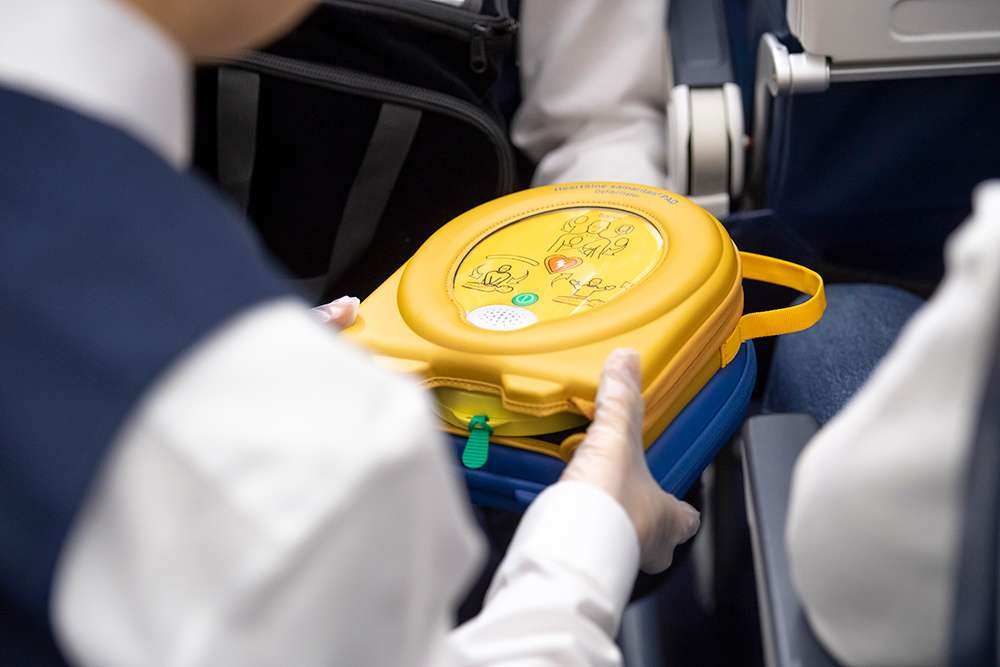 |
The DAK tells you what is happening. The AED introduces automated intervention when cardiac arrest is identified. MedAire's HeartSine Samaritan PAD 450P is designed specifically for the aviation environment: compact. Compact, lightweight, and IP56-rated, it is built for reliability in cabin conditions. Integrated technology supports performance, with a CPR Rate Advisor providing real-time visual and verbal guidance in line with AHA guidelines, helping non-medical crew deliver effective resuscitation under pressure.
|
The DAK and AED address the full spectrum of a cardiac event. One identifies it early. The other responds when every second counts.
Crew Readiness
Kits and Training: The Foundation Everything Else Depends On
Technology does not replace the basics of in-flight medical response. It depends on them.
A connected app, a diagnostic kit, and an AED are only useful if crew can access the right equipment, follow the right process, and communicate clearly with MedLink under pressure.
Training connects these elements into one response system. Crew need to know how to assess a passenger, locate medical supplies, use available equipment, communicate with MedLink, and support the passenger until the aircraft lands or care is transferred.
Connected technology, clinical-grade diagnostics, AEDs, medical kits, MedLink physicians, and trained crew each reinforce the others. Remove any one of them, and the system is weaker.
What Comes Next
Connected Medical Monitoring in Aviation
"While in-flight medical support cannot fully replicate the comprehensive care available on the ground, the advancements in connectivity are bringing us closer to providing robust support in the air. There are new benchmarks we can start aiming for."
Dr. Paulo Alves — Vice President of Aviation Health, MedAireThe aircraft cabin will always have constraints: altitude, limited space, limited personnel, and distance from definitive care. But technology is changing what is possible within those constraints.
The future of in-flight medical response is not one device or one app. It is an integrated system: connected aircraft, structured assessment, digital diagnostics, AEDs, medical kits, trained crew, and MedLink physicians working from the same information.
| Explore the Digital Assessment Kit | Learn About MedLink |