OUR COMPANY
Audio version of this article
In Summary: Aircraft medical kits typically include first aid supplies, medications, breathing support items, survival tools, and equipment for checking vital signs. The exact contents vary by aircraft type, route, and whether the operator is an airline or private flight department.
How have aircraft medical kits changed over time?
Before MedAire introduced the first specialized medical kits designed for aviation, onboard first aid was meant to assist in the survival of an accident, not to mitigate medical emergencies of passengers.
Since then, aviation medical provision has evolved to include advanced medical kits, Automated External Defibrillators (AEDs), and Digital Assessment Kits (DAKs) to improve the quality of in-flight medical response.
These kits are shaped by learnings from over 1,000,000 cases, with annual suitability reviews by aviation physicians.
What Is Inside an Aviation Medical Kit?
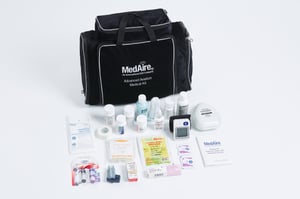
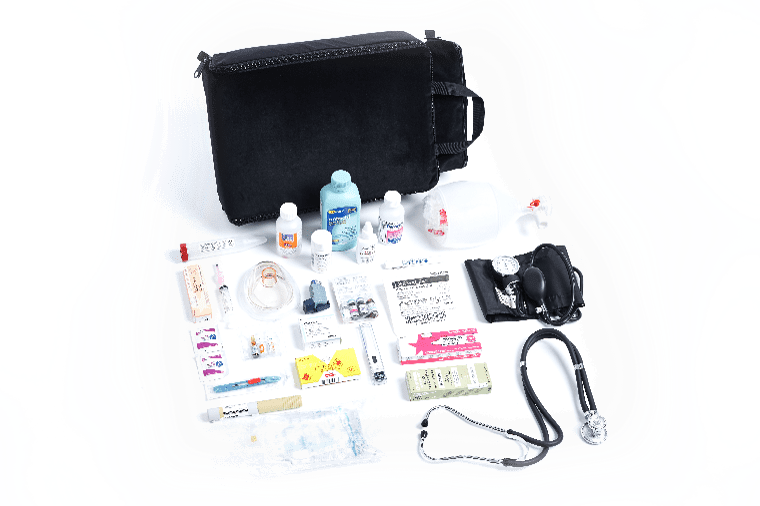
The most common in-flight medical events are neurological (primarily fainting and dizziness), gastrointestinal (nausea, vomiting), respiratory issues, and cardiovascular symptoms. Kits are designed to address these, as well as a wide range of injury and illness. Aircraft medical kits differ by aircraft type and regulatory authority, but most contain:
.svg) First Aid & Wound Care: Supporting the most common in-flight medical issues Dressings, Bandages, Antiseptics and Splints  Vital Signs equipment: The cleaner the medical data, the more accurate clinical decisions will be Digital blood pressure cuffs, Thermometers, Pulse oximeters, Glucometers |
.svg) Medications: Including Non‑Prescription with MedAire’s authorisation Cardiac, allergy, and respiratory medications, Anti nausea and pain relief, respiratory inhalers  Survival & Support Equipment: For Passenger stabilization Emergency blankets, Flashlights, CPR masks, Oxygen tubing |
MedAire produces 17 kits globally every hour.
How does MedLink support In-Flight decision making?
MedLink provides 24/7 real time medical guidance to flight crews. When a crew member calls MedLink they:
1. Collect patient information and/or vitals.
This can be over the phone or through MedAire’s In-Flight App, a powerful patient assessment tool that can speed up assessment and reduce crewmember stress
2. The doctor reviews symptoms and provides immediate instructions.
MedAire physicians can view an aircraft’s medical kit inventory, allowing them to recommend treatments based on exactly what is onboard.
3. The physician advises whether diversion is necessary.
If a diversion is required, MedAire uses clinically validated, continuously updated global medical facility information to guide the aircraft, while the crewmember support the patient.
Who regulates aviation medical kits?
Aircraft medical kits are shaped by requirements and guidance from aviation authorities such as:
-
ICAO (global): Sets international Standards and Recommended Practices (SARPs) for onboard medical supplies, which are adopted by national regulators.
-
FAA (United States): Regulates medical kits under 14 CFR Part 121 (Section 121.803) and Part 135 (Section 135.177).
-
EASA (Europe): Defines requirements through CAT.IDE.A.220 and CAT.IDE.A.225, enforced by national aviation authorities.
Beyond meeting aviation requirements, MedAire supports kit quality through ISO 9001 processes, controlled medication management, and structured audit controls. MedAire fulfills kits globally through primary hubs in Phoenix and Paris, producing more than 150,000 kits each year.
What Types of Medical Kits Do Airlines and Business Aviation Use?
Airline Medical Kits
|
FAK / AFAK |
EMK |
Enhanced EMK |
AEDs |
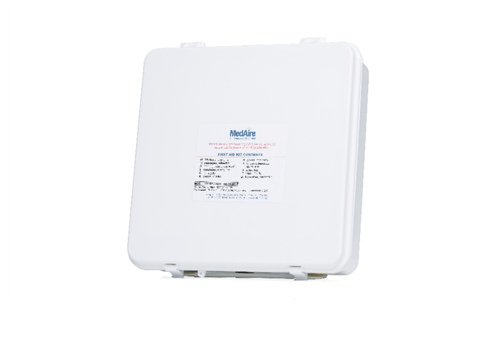 |
FAK / AFAK: For common onboard issues Designed to support crew in managing routine medical issues with non‑prescription medications and basic first aid supplies. |
Business Aviation Medical Kits
Business aviation requires more flexibility due to varied passenger profiles and long range missions:
|
Advanced First Aid Kit (AFAK) |
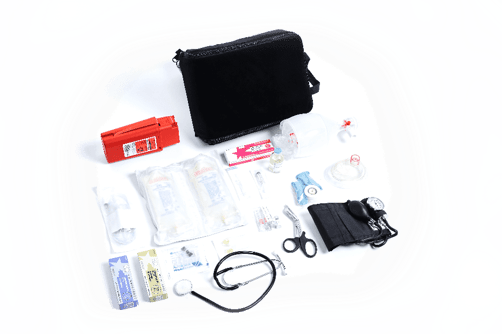
Emergency Medical Kit (EMK) |
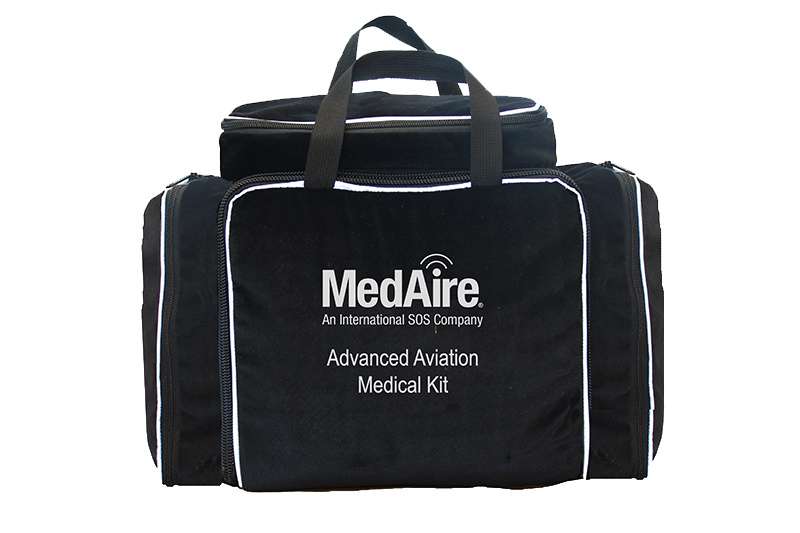
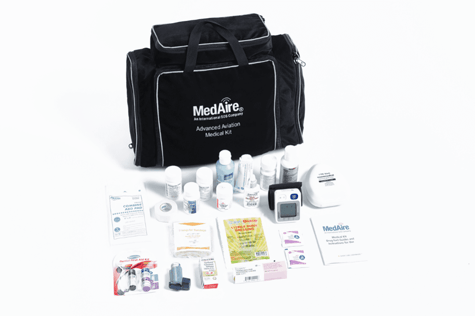
Advanced Aviation Medical Kit (AAMK) |
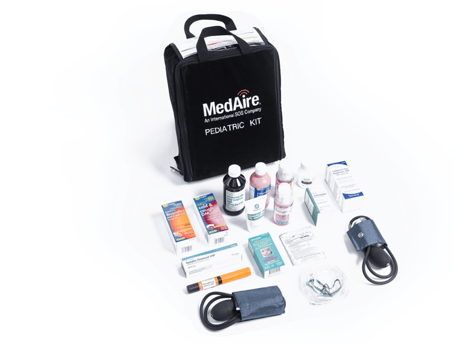
Paediatric Medical Kit (PMK) |
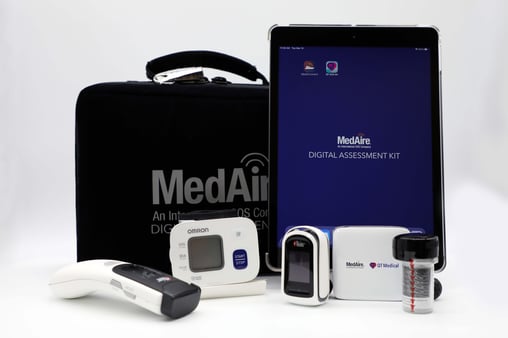
Digital Assessment Kit (DAK) |
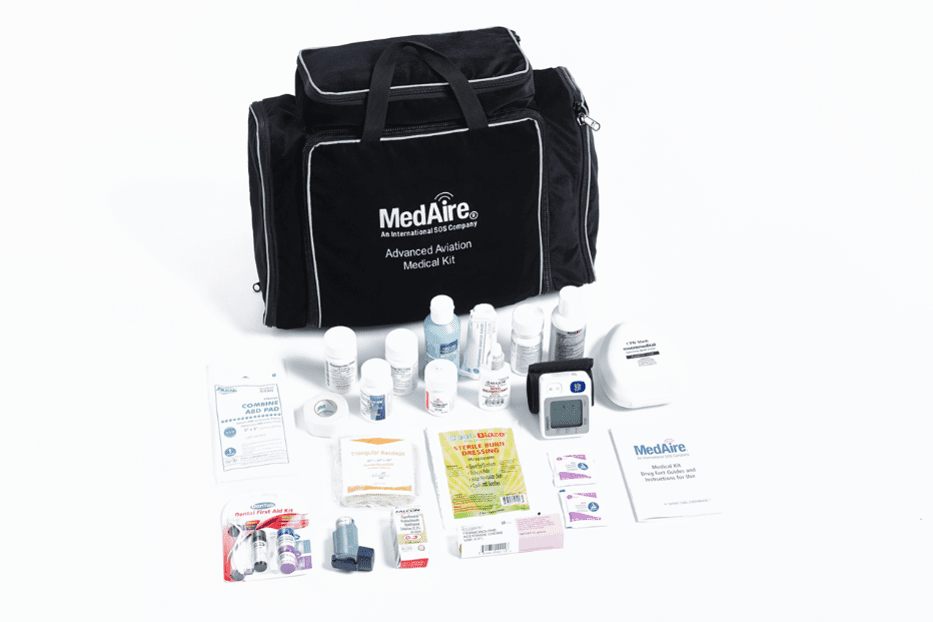 |
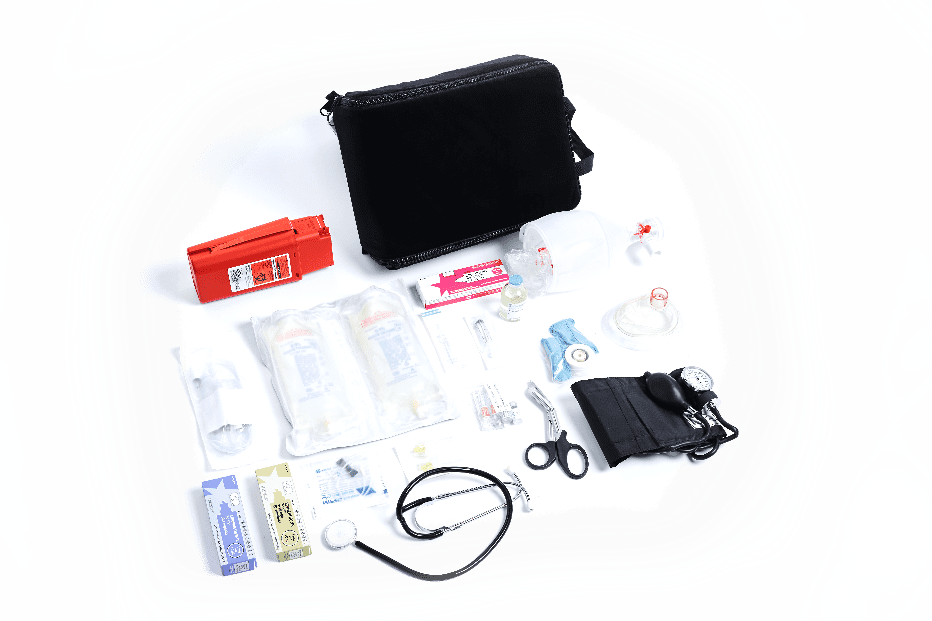
Advanced Aviation Medical Kit (AAMK) Basic First Aid Kit that supports most in-flight medical events and maintains regulatory compliance for your aircraft. |
How Should Operators Select the Right Kit?
Selection depends on:
- Route structure, including long-range and remote-airport operations
- Passenger demographics, such as executive, family, or higher-risk travelers
- Crew training level
- Applicable regulatory requirements
A properly matched kit can improve onboard response and reduce unnecessary diversions.
Why the Right Medical Kit Makes a Difference
Choosing the right kit means matching onboard equipment to the aircraft, the mission, and the support available in-flight and on the ground. While regulations define minimum requirements, real preparedness comes from equipping crews with the right tools and expert support to respond effectively. When medical kits are well chosen, regularly maintained, and clinically supported, they form a critical part of the aircraft’s overall safety system.