
OUR COMPANY
Safety Advisory: Increased Needle Risk in Guest Waste Onboard Yacht
Audio version of this article
Overview
Crew are encountering more used needles in guest waste as injectable GLP-1 weight-loss and diabetes medications become more common. Improperly discarded injection pens increase the risk of accidental needlestick injuries. What happens after an exposure is a structured medical process that can run for six months and it is significantly harder to deliver on a vessel underway.
Quick Answer
After a needlestick injury onboard, wash the wound, preserve the needle if it is safe to do so, and contact MedAire immediately. HIV post-exposure prophylaxis must start within 72 hours, and the decision to start it depends almost entirely on what is known about the source of the needle.
Safety Advisory: Increased Needle Risk in Guest Waste and Crew Response to Needlestick Injuries
1. Why Needle Exposure Risk Is Increasing
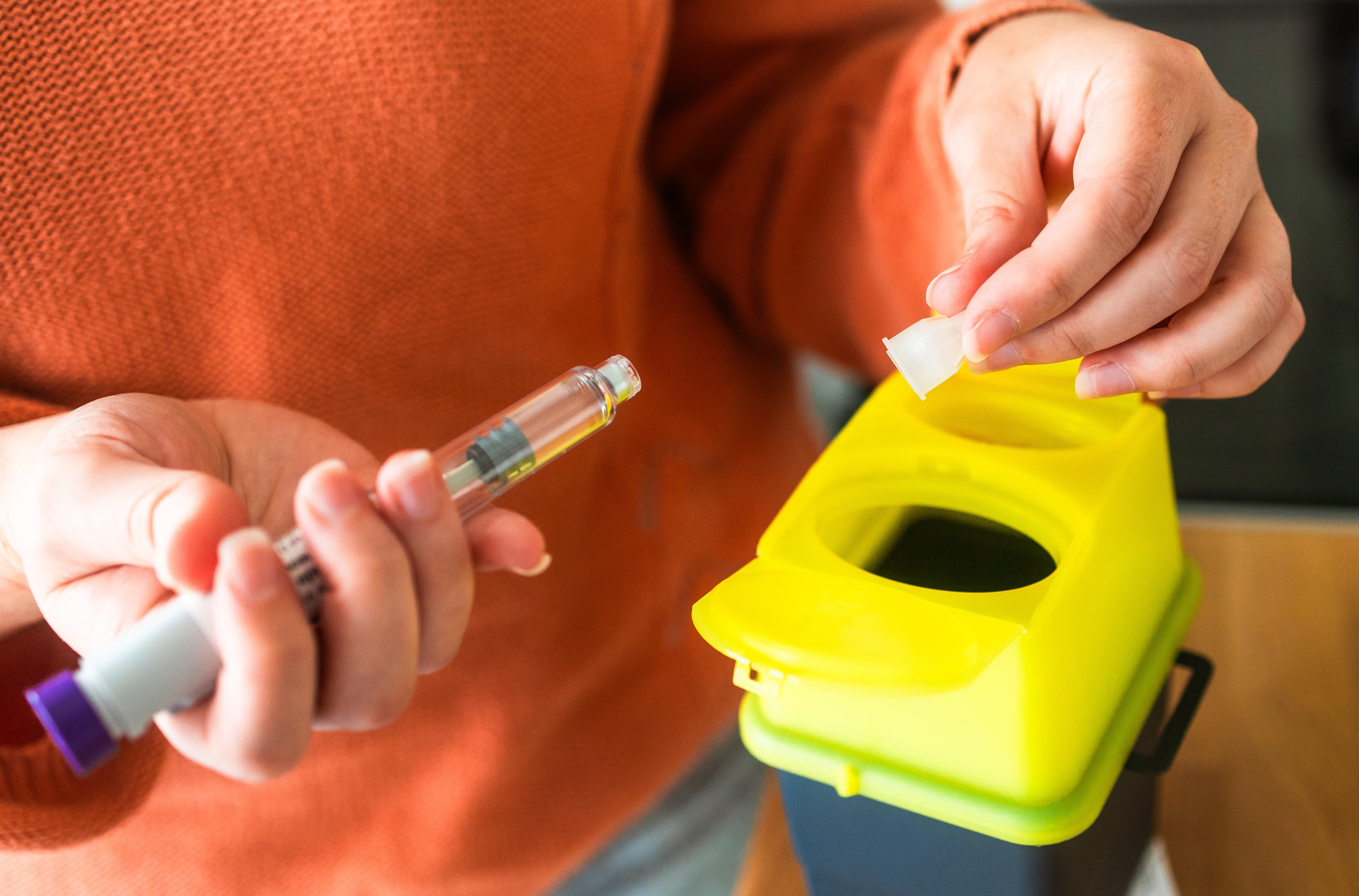
The use of injectable GLP‑1 medications such as Ozempic, Wegovy, and Mounjaro has increased significantly. Many guests now travel with prefilled injection pens for weight loss or Type 2 diabetes management. These pens are often small, medical‑looking devices that do not resemble traditional needles, making them easy to miss in general waste.
Common disposal issues include:
- Pens discarded in bathroom bins
- Pens hidden in tissues or packaging
- Pens mixed with general cabin waste
- Uncapped devices placed in soft trash bags
The global rise in Type 2 diabetes also contributes to increased onboard injectable medication use. As a result, crews should expect more sharps exposure risks during cabin servicing and waste collection.
2. How Crew Can Prevent Needlestick Injuries
Providing preventative systems reduces sharps exposure for flight and yacht crews. MedAire recommends placing discreet sharps containers in guest cabins to encourage safe disposal. However, sharps may still end up in general waste, so operational precautions remain essential.
Risk‑reduction practices:
- Treat all guest waste as potentially hazardous.
- Do not compress bags with your hands.
- Use puncture‑resistant gloves when appropriate.
- Visually inspect waste before handling.
- Place any discovered sharp objects into a rigid sharps container.
- Report any known or suspected sharps immediately to the safety lead.
Any found needle should be handled as a biohazardous sharp.
3. What Crew Should Do Immediately After a Needlestick Injury
Follow these steps promptly and calmly if a crew member is injured:
Step 1
Wash the area
- Wash the site with soap and water.
- Do not scrub or use harsh chemicals.
Step 2
Encourage mild bleeding
- Gently massage around the wound to promote brief, light bleeding.
- Do not suck the wound.
Step 3
Gather essential information
If appropriate and discreet:
- Determine whether the individual who used the injection device (if identifiable)
- Has ever been tested for HIV, Hepatitis B, or Hepatitis C
- Has Hepatitis B vaccination
- Has any known blood‑borne infection history
Also document:
- The injured crew member’s vaccination status (especially Hepatitis B)
- Details about the needle’s appearance, where it was found, and how the injury occurred
Step 4
Contact MedAire / MedLink
Provide all collected information so medical specialists can conduct an accurate exposure‑risk assessment and recommend next steps.
4. Medical Management After Exposure
A medical professional will assess risk by reviewing:
- Needle type
- Whether the source patient is known
- Medical history of the source and crew member
- Severity and nature of the exposure
Where risk is credible, management follows three phases:
A. Baseline Blood Tests
- HIV test
- Hepatitis B surface antigen and surface antibody
- Hepatitis C antibody
- Complete blood count (CBC) and liver function tests
B. Post‑Exposure Prophylaxis (PEP)
- HIV PEP: A 28-day course of antiretroviral drugs may be prescribed where the source is HIV-positive or of unknown status.
- Hepatitis B PEP: If the crew member is not immune, they will receive the hepatitis B vaccine and, depending on the assessed risk, hepatitis B immune globulin (HBIG).
- Tetanus: A tetanus booster may be given if vaccination is not current.
C. Follow-Up Testing
- Repeat blood tests are scheduled at 6 weeks, 3 months, and 6 months to monitor for HIV and hepatitis C seroconversion.
- The crew member should also be briefed to watch for signs of infection at the wound site.
5. Key Takeaways for Aviation and Maritime Crew
- Used needles in guest waste are increasingly common due to GLP-1 and diabetes-related injectable use.
- Place sharps containers (order through the eshop in the client portal)in guest cabins and treat all guest waste as potentially hazardous.
- After an exposure: wash, encourage light bleeding, retain the device, and call MedAire immediately.
- Post-exposure care means baseline bloods, possible PEP and follow-up at 6 weeks, 3 months, and 6 months.
- On a vessel underway, the constraint is usually logistics rather than medicine. Involve MedAire while options are still open.
Frequently Asked Questions
Have Question? We are here to help
What should yacht crew do immediately after a needlestick injury?
Wash the wound with soap and running water, encourage brief light bleeding, and cover it with a waterproof dressing. Do not scrub or apply disinfectant chemicals. If safe, place the needle in a rigid sharps container and retain it. Contact MedAire straight away, treatment decisions are time-limited and should not wait until the next port.
How long does a crew member have to start HIV post-exposure prophylaxis?
HIV post-exposure prophylaxis must be started within 72 hours of exposure, and effectiveness decreases the longer treatment is delayed. On a vessel underway, this window is often the binding operational constraint, which is why MedAire should be contacted at the time of injury.
What if the guest who used the needle cannot be identified or asked?
The exposure is then managed as unknown-status, which typically means a more cautious approach including consideration of HIV post-exposure prophylaxis. This is a routine and legitimate scenario. Document the attempt to identify the source and proceed with the assessment, an unknown source does not stop the process, it changes the risk calculation.
What blood tests are required after a needlestick injury?
Baseline testing usually includes an HIV test, hepatitis B surface antigen and surface antibody, hepatitis C antibody, a complete blood count, and liver function tests. Follow-up tests are scheduled at 6 weeks, 3 months, and 6 months to monitor for HIV and hepatitis C seroconversion.